
W. Dalla Barba · Italtecno Solutions S.r.l. (Italy)
Sealing is the final stage of aluminium anodizing. It closes the pores of the anodic oxide and gives the coating its definitive chemical and physical properties, strongly influencing the corrosion resistance of the finished anodized product. After introducing the electrochemical behaviour of aluminium and the main surface treatments, this article reviews anodizing, industrial baths, sealing methods and proposed mechanisms, with particular attention to corrosion resistance.
Aluminium and its alloys have found widespread use after the setup of its industrial production process thanks to three fundamental features: ° its lightness (density= 2.7); e good mechanical properties, which can be improved with the addition of suitable alloying elements; ° satisfying resistance to corrosion. Aluminium is now used in foils for food-stuff and condensers, soft-drink cans, tanks, electric wires, architectural sections, as well as in alloys with great mechanical properties in aeronautical and space constructions. The European production of aluminium semis in 1995 has exceeded 2,3 million tons; approx. half of this is accounted for by extruded products, 60-70% of which are anodized. These data show the importance of research for the anodizing process and particularly on the sealing phase which strongly conditions the quality of the end-product. The behavior of aluminium to corrosion is due to the oxide stability. The oxide forms spontaneously from the reaction of the metal with atmospheric oxygen and water. Such natural oxide, with a thickness of several hundreds of Å (100–300), is elastic and tough and tends to rebuild rapidly, if mechanically damaged. Aluminium oxide is stable at pH ranging from 4 to 9 with some exceptions, e.g. in pure nitric acid and pure ammonia. Given its reactivity with high and low pH values, aluminium has an amphoteric behavior. Such pH conditions determine a generalized destruction of the oxide film, while forms of localized corrosion (pitting, intergranular cracks, etc.) depend on various factors. Pitting can develop on immersed metal or from the contact with an aggressive solution, i.e. when the metal surface is covered by a thin layer of solution or when electrolyte drops remain on the surface. It is more frequent in an almost neutral environment where the protective natural oxide film is considered stable; therefore uniform
generalized corrosion is not favoured due to the lack of dissolution of the oxide film. Another example of very dangerous localized corrosion is “intergranular” corrosion. It is a form of a localized attack underneath the surface where grooves or cracks open, commonly along the edges of the metal grains. Its mechanism is still electrochemical and depends on the presence of galvanic micro-cells at the edge of the cells. Also this type of corrosion is remarkably dangerous as it is difficult to control. In order to delve into an accurate study of the various types of corrosion it is necessary first of all to consider the influence of environmental factors and alloy constituents, since the technological features required of the metal in the various fields of application do not consider the use of pure metal. Nvironmental factors for alumium can be considered the llowing: ater, temperature, contact with rrosive liquids, environmental npurities. “actors influencing corrosion can
Environmental factors for aluminium include water, temperature, contact with corrosive liquids and impurities in the environment. Other factors influencing corrosion are chemical and physical, such as the surface-to-volume ratio of the object, heat exchange at the surface and the type of surface finish (anodizing, painting, etc.).
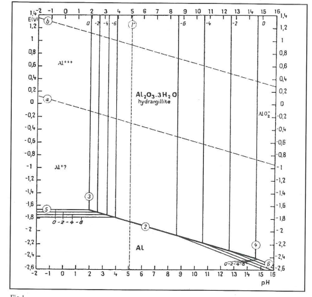
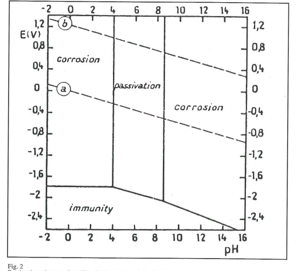
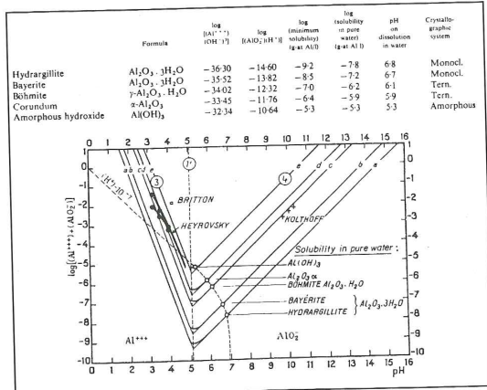
The most common types of corrosion which can lead to the deterioration of the aluminium product are the following: e uniform generalized; e localized: * pitting, * crevice, e stress-cracking, ° fatigue, ° cavitation, ° erosion, ° fretting. The electrochemical behavior of aluminium in contact with aqueous solutions is well described in the graphical representations of the possible thermo-dynamic balance of the system Al/H₂O, as shown in picture 1, commonly known as Pourbaix diagram (1). In it are traced areas of stability of the various species (Al, Al³⁺, AlO₂⁻, Al₂O₃. 3H₂O) in function of the potential and of pH. The diagram also shows water balance (H+, OH-, H₂O0, H>, O, species) from which the area between the two lines a) and b) is detected as stability area of H₂O, H+, OH’; above line b) O, is stable, below line a) H, is stable. Figure 2 reports the same diagram in simplified form, with the indication of the immunity area (or thermodynamic stability with very negative potentials) of corrosion areas (in acid or alkaline solutions) and of passivation (in solutions with intermediate pH, for the insolubility of the hydrated oxides). Figure 3 shows Al₂O₃ oxide and hydrated oxides oxide solubility as a function of pH. It varies from 10⁻⁵ to 10⁻⁸ moles/litre., passing from amorphous hydroxide, Al(OH)₃ to hydrated oxide Al₂O₃. 3H₂O, with extremely low dissolution rate/velocity.
We will not go into further detail, but it should be emphasized that the representation cited is based on thermodynamic equilibrium data between pure substances. The described behavior can therefore be influenced by depassivating anions, such as chloride ions, which are well known to cause pitting corrosion in passivated metals.
If we bear in mind that natural oxide thickness is approx. 100 Å (the continuity of which is influenced by the metal structure and surface finishing), and that during the working process local changes in the media can occur thus bringing to more aggressive conditions, the result is that the protection of natural oxide is not sufficient for many applications. For these reasons numerous protective treatments have been developed, through which corrosion is practically nullified in several aggressive environments. Moreover thanks to the above surface treatments, the natural aspect of the metal can be maintained and a wide range of colouring can be achieved. The various methods of protective finishing which have been developed have widened the application field of aluminium and its alloys.
SURFACE FINISHING TREATMENTS
The various surface treatments currently used can be grouped in the following categories: a) Chemical Conversion; b) Anodizing; c) Painting; d) Varnishing; e) Galvanic Deposition. Oxide, phosphate and chlorate films with a thickness of 2.5-5 µm are formed by immersion in chemical baths with Chemical Conversion Treatments. Conversion deposits act as corrosion protection in light applications and as a basis for paints and varnishes. Anodizing consists in the anodic treatment in suitable electrolytic baths and brings to the formation of an oxide layer the thickness of which varies from 5 to 30 µm, depending on the type of bath, on
Depending on the conditions, oxides with an elevated thickness (up to 150 µm) can form: this is the so-called “hard anodizing”, which is carried out in specific baths on mechanical parts which must undergo severe duties. Electrodeposits (Cu, Zn, Ni) are normal galvanic deposits obtained with particular devices in order to achieve a good adhesion and low deposit porosity which grant complete protection, given the fact that they are normally nobler metals than aluminium. Anodizing is an electrolytic process through which an accelerated growth of the oxide layer on aluminium is obtained. Aluminium, in contact with the oxygen in the air, is immediately covered with a thin oxide layer. Clearly, soon’after the formation of the first monomolecular layer of Al₂O₃ the contact between aluminium and oxygen is interrupted. Actually, the layer continues to grow naturally, at least until a thickness of approx. 40–300 Å is reached; this is due to diffusion processes activated by complex electrical phenomena on the surface. Al³⁺ ions cannot grow beyond this thickness without the intervention of an electrical field which attracts them and lets them pass through the pre-existing oxide in order to form a new oxide for reaction with oxygen. This is what happens when aluminium in a suitable electrolytic solution is anodized by connecting it to the positive pole of a current rectifier. In general, electrolytes which can determine the formation of an anodic oxide on the surface of aluminium are acid-based. Theoretically, every oxygenated acid could be suitable for this purpose, but actually not all of them have the features required for a Correct acid growth. The most used acids for anodizing baths are sulfuric acid and oxalic acid (and their mixtures), phosphoric acid and chromic acid. Moreover there are particular baths made up of acids or complex mixtures of acids, which can be used for particular and very specific applications: sulfuric and oxalic acid mixtures with malic, citric, glycolic, sulphosalicylic, maleic or phthalic acids. It has to be noted that, unlike treatments such as copper-, goldand nickel-plating are instead cathodic: the object to be treated is connected with the negative pole and the metal dissolved by the positive pole deposits on the object itself. Therefore under the effect of an applied current, instead of an anodic dissolution – as in copper and other metals – anodic oxide layer which forms on aluminium becomes thicker with a more elevated current applied. Tn practice, the layer increases up to a thickness of 14 Å for each volt applied (as is known, current can pass through the oxide only as anion flow since oxide conductivity for electrons is very low). Theoretically Al³⁺ ions cannot pass through an oxide wall thicker than 14 Å/V; however, in industrial thickness are achieved with only 18 volt voltage. This is related to the fact that oxide layers are not actually compact, but are characterised by a typical porous structure (see Fig. 7 and 8), which allows anodizing process to take place even on the layer at the bottom of the pores. Pores actually form in the first treatment stages in points with an uneven surface where current passes more easily with a subsequent increase of the dissolving power of the bath. In fact, during the anodizing process two contrasting phenomena take place: the first is oxide formation, the second is its dissolution caused by a new chemical attack by the electrolyte. According to relative speed of the two phenomena the following cases may occur: ID N. 2 March/April 1996 1) Null dissolution rate: In this case compact layers are achieved which are employed for instance in the condenser sector. The solution must have a base of salts with low aggressive power in respect to aluminium. Moreover high current density, i.e. high voltage, must be used. 2) Low dissolution rate: a) minimum: Hard Anodizing In this case porosities are formed which permit the formation of a hard oxide layer and with remarkable thickness, widely used in wearproof applications. Electrolyte is sulfuric acid based; to limit its dissolution effects low working temperature and high voltages are required. b) Moderate dissolution rate: Architectural Anodizing This is the most used finishing. In this case the total volume of the pores is higher than in the previous case, and it permits a subsequent coloring stage. Solutions adopted for this type of based and work at controlled temperature of approx. 20 °CC. 3) High dissolution rate: Polishing The oxide just formed is immediately dissolved; therefore a rapid and uniform dissolution of the metal is possible, roughness is smoothed and a mirror-like surface is achieved. In general the solutions used in this technique are based of sulfuric, nitric and phosphoric acid and work even at high temperatures.
Let us now examine in greater detail the different types of anodizing treatments.
Barrier Layer Anodizing It is characterized by the features of the oxide layer which is generally lower than 0.5µm and is particularly compact and without porosity. The anodizing solutions employed are weakly acidic, like ammonium tartrate or boric acid, with working voltage higher than 100 V which can reach even 500 V. A typical use of this finishing is in electrical insulation; for this type of application the layers must be obtained preferably on extra-pure aluminium (99.99%) to achieve the best dielectric features. Hard Anodizing A typical feature of this treatment is the hard anodic coat it generates with thickness ranging from 25 to 125µm. These thicknesses are typical for granting high resistance to wear and abrasion. Hard anodizing treatments work with low electrolyte temperature, high current density and voltage. This determines a modest solvent action of the electrolyte and the possibility to form a cell wall with a sufficient thickness. The main device used to limit the attack on the oxide is the reduction of bath temperature, which works between -10 °C and +10 °C. This technique is used for all types of hard anodizing techniques; each single process is differentiated by the accurate definition of the temperature and current density combinations. In fact those combinations together with the chemical combinations of the alloys make it possible to achieve the best results in terms of hardness and resistance to oxide abrasion. When hard anodized finishes are used it is important to consider some basic points: ¢ Dimensional problems: pure oxide layers grow by developing towards the inside of the metal, but they occupy a larger space than that of aluminium transformed in oxide. This feature should be considered while designing the dimensions of pieces to be hard anodized, bearing in mind that approx. half of the thickness of the layer becomes stock; ° Hardness and resistance to abrasion: the measurement of the hardness of thin layers, deposited on relatively soft material, is significant only if it is carried out on a layer section, thus on oxide thickness not thinner than 30 ym. In order to measure the hardness of hard oxide layers on castings, particularly those produced with high Si content alloys, it is necessary to keep in mind that metal silicon particles remain trapped in the oxide thus altering the measurement results. Moreover, the oxide layer hardness is function of numerous parameters, among which essentially the anodizing working conditions, the nature of the electrolyte and the alloy type. At last it is worth remembering that there is no proven correlation between oxide layer hardness and abrasion resistance of the same layer: this last can be different from case to case according to surface roughness of the piece. Therefore it is also influenced by the practical working conditions of the manufactured article. Usually the hard oxide is not hot sealed in order to avoid a reduction of its hardness. On the contrary, it is possible to cold seal it to increase its anticorrosion features without reducing its hardness (30°C, Nickel-fluoride base formulations). Porous Anodizing No doubt this is the most wellknown type of anodizing. Besides its implicit function as a protection of the oxide coating, its most important parameter refers to look. This is why materials intended for mical and structural properties. If the crystalline microstructure is homogeneous, the oxide – which develops its own structure according to the structure of the crystallographic levels – will be uniform and free from macroscopic visual defects. If, instead, the structure is non-homogeneous with large-sized individual crystalline grains, stripes and haloes will appear on the anodized surface. This is the reason why the original material must be characterized by certain specific properties, especially if the manufacture has to show features of a particular uniform look. This is the case for example with the plates for anodic oxide laminates intended for construction, for furniture, costume jewellery, etc. In fact, the anodizing plates, in general made of aluminium 1050, are prepared with a special care for their original chemical composition, for casting parameters, for grain refining processing and for homogenizing conditions. As far as the influence of the chemical composition is concerned, the best anodic coatings for uniformity and glossiness are obtained on non-alloyed aluminium with a low impurity content and on low alloyed metals of a fine and uniform micro-crystalline structure. If we have mentioned aluminium 1050 among the materials used for laminated products, among the extruded products the alloy 6060 should be highlighted. This makes up the base for widespread section systems for anodized metal frames. On alloys deriving from plastic processing, characterized by a high alloying level – and on almost all foundry alloys in general – even if they derive from a primary compound, the anodic oxide is usually thin, soft and has a matt and a rather dark look. OXIDE PROPERTIES The structure and properties of the anodic oxide have long been subject for in-depth research in many laboratories due to their extreme importance in view of an improvement of the oxide features, of an optimization of the process and of the choices and methods used for quality control. The bibliographic material is vast and recently numerous reviews on
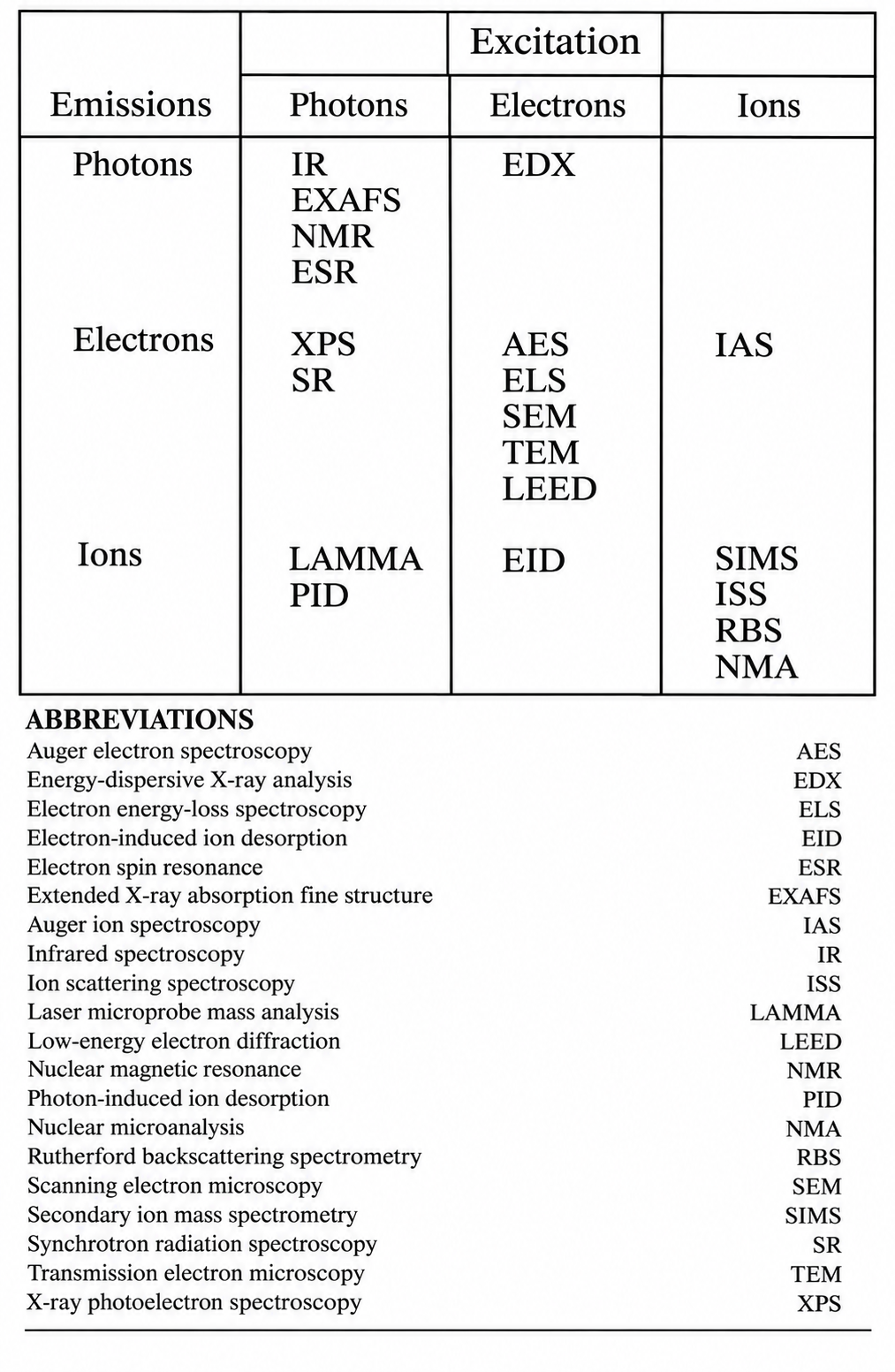
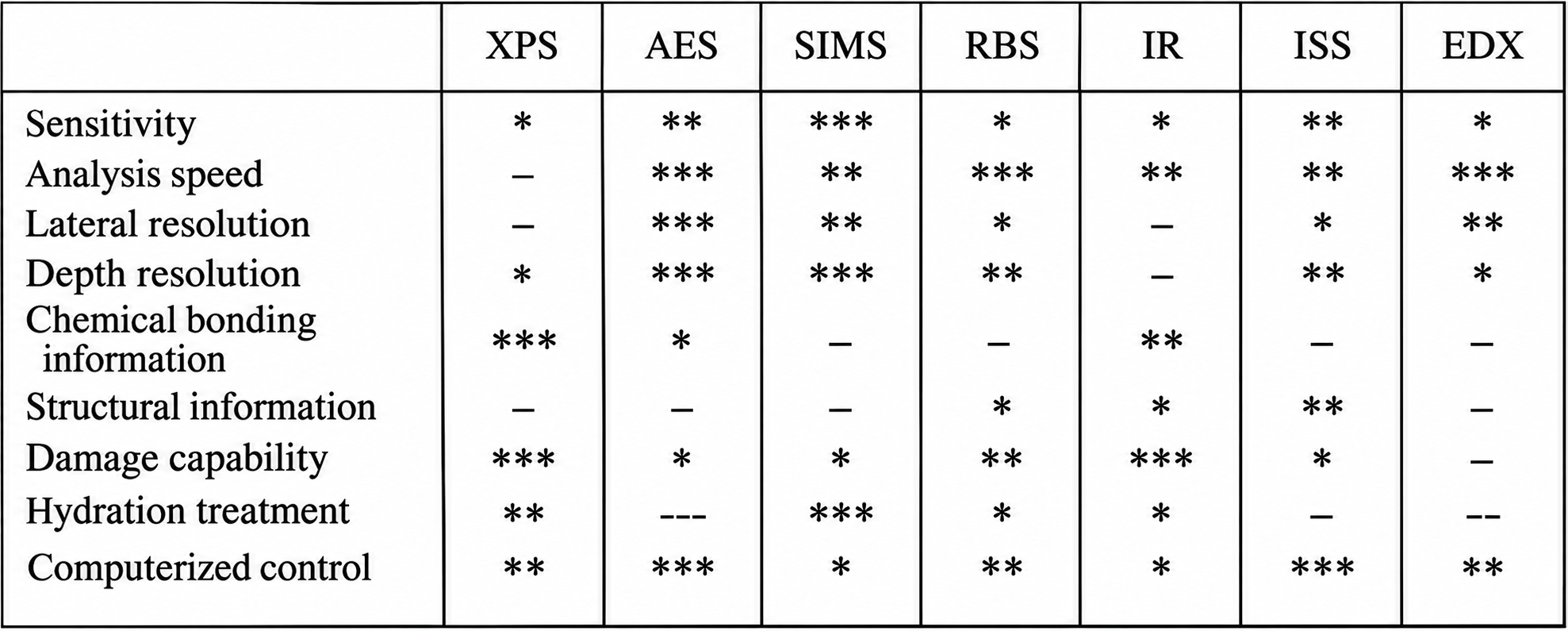
this subject have been issued (2,3). The morphology, the composition and the structure of the oxide coatings obtained by the anodizing of aluminium and some of its alloys have been studied. The main methods of investigation utilized are physical methods based on surface tests, which consist of the analysis of the irradiation of the specimen with a primary radiation (photons, electrons or ions), on the examination of the perturbation undergone by the primary radiation itself or on the analysis of the secondary particles emitted. A general picture of the methods used for surface finishing tests is given in Table 1, while Table 2 shows a comparison between the data which can be obtained by different test methods. Obviously it must be mentioned that because these methods are implemented “ex situ”, there may be the risk that the specimen undergoes modifications during the transfer from the electrochemical cell to the test equipment. As far as the study of the anodic oxide is concerned, these changes are limited, because the hydration by absorption of atmospheric moisture is relatively slow at ambient temperature. Nowadays these test results give a complete picture of the properties of the anodic oxide. Chemical composition To be sure oxygen and aluminium are the greatest components of the oxide. They appear in exact stoichiometric proportion of the compound Al₂O₃ (4). Also deficient oxides in the oxygen (5) or in aluminium (6) may be indicated. The deViations from the perfect stoichioMetry of the composition, usually Tevealed at the metal/oxide and the Oxide/solution interfaces, may detive from hydration or incomplete Oxidation. In general the anodic oxides incorPorate species of anodizing electrolyte, in particular anions such as Sulphates, phosphates and oxalates.
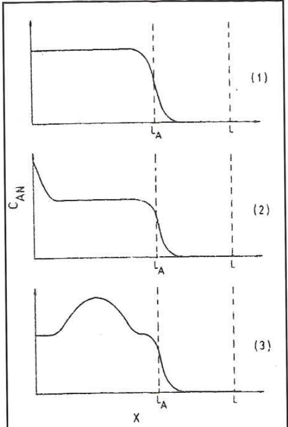
The readout data regarding the anion content in the oxides are often at variance. The results relating to the various anodizing baths indicate percentages of approximately 10% for sulfates, 8% for phosphates, and somewhat less for oxalates (2%) and for chromates (0.1%). The distribution of anions within the oxide layer is brought about by ionic bombardment by chemical separation of the oxide specimens and subsequent APS or XPS tests. In oxides obtained by anodizing in neutral solutions, the anions usually show a uniform distribution throughout 2/5-4/5 of their total thickness on the solution side, while oxides formed by acid solutions show a max. concentration of approximately 1/3 of the thickness, always considered from the solution side. In both cases the interior oxide layer (from the metal side) does not incorporate anions (7,8).
Figure 4 shows the various anion concentration profiles measured in anodic oxides obtained from neutral baths (curves 1 and 2) and acid baths (curve 3).
This research is extremely important, because it has considerably contributed to clear the function of the incorporation of anions within the anodic oxide formation process. Various hypotheses have been proposed in this regard. Some of these attribute a capacity to the anion of being able to modify the oxide structures due to its co-ordination property, which substitutes the alumina tetrahedron in the oxide body (9). Other assumptions maintain that the anions stabilize the alumina tetrahedrons and octahedrons (10). Another interesting aspect which has been studied in detail concerns
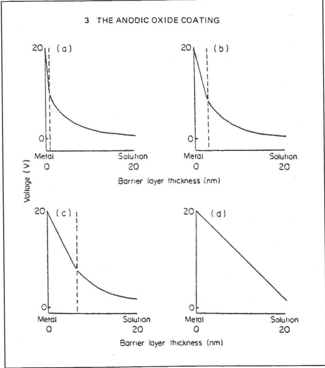
the effect that the anion incorporation has on the distribution of the electric field through the oxide thickness and the consequent correlation between the distribution of the field and the kind of oxide formed (11). If we assume that the electric field applied to the oxide during its formation is not uniform, this means that the potential gradient is higher in the interior zone near to the metal and lower in the exterior zone contaminated by the anions. The anodic potential set is divided between the two zones according to their respective thicknesses
and resistivities. The result is a high gradient in the interior zone made up of pure alumina and a smaller gradient in the exterior zone contaminated by anions. For a given applied anodic potential, the greater the thickness of the layer contaminated by anions, for a certain value of applied anodic potential, the higher is the potential gradient in the interior layer, and the faster the speed of the oxide growth. Since the ratio of contaminated outer layer to pure inner layer increases in the order chromic acid < phosphoric acid < oxalic acid < sulphuric acid, it may be concluded that the rates of oxide growth and dissolution increase in the same order (16). The phenomenon can be seen in the trends of the potential gradient in the pure alumina layer (barrier layer) in various anodizing baths.
STRUCTURE OF THE ANODIC OXIDES
The literature reports both amorphous and crystalline structures for anodic oxides. Most oxides have an amorphous structure with short-range crystalline order, corresponding to tetrahedral and octahedral coordination of the aluminium ions (12). Amorphous oxides can be represented as a series of Al₄O₆ molecular units. The union of these units in stacked sheets produces a group of octahedral and tetrahedral sites occupied by Al³⁺; the proposed structure is shown in Figure 6.
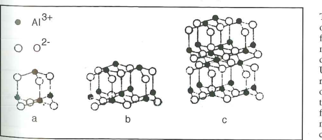
Crystallinity has been observed in thick oxides (13) and in oxides with a composite structure, that is, anodic oxides formed on aluminium already covered by a thin thermal oxide film (14). The degree of crystallinity and the coordination number of aluminium influence the stability and mechanical properties of the oxides; their dependence on the electrolyte and anodizing conditions has also been established. Infrared studies of Al–O bonds have established the AlO₆:AlO₄ ratios in the structure and led to the conclusion that the hydration capacity of the oxides depends on this ratio. Tetrahedral sites hydrate readily to form a boehmite-type structure, consisting of double layers of centred Al octahedra, weakly bound to the other layers by water molecules.
Since oxide formed in phosphoric acid contains 70% tetrahedral Al, it should have a greater tendency to hydrate than oxide formed in tartrate, which contains 20% tetrahedral Al. This does not occur in practice; the fact has been attributed to a reduction of AlO₄ by the incorporated phosphate ion (15).
MORPHOLOGY OF THE ANODIC OXIDES
The morphology of anodic oxides has been widely studied. A fundamental contribution has been made by researchers at the University of Manchester, from the 1950s to the present. Their findings describe a non-homogeneous oxide consisting of two layers: a thin, compact layer, a few hundred ångströms thick and adhering to the metal, and a porous layer with a columnar structure whose thickness can exceed one hundred micrometres. The classical morphology is shown in Figures 7 and 8, SEM micrographs of a section and the external surface of unsealed oxide.
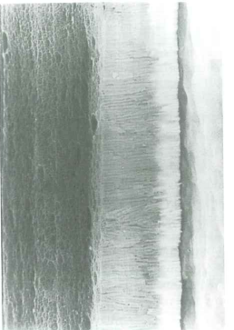
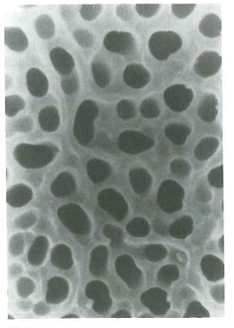
The pores are tubular with hemispherical bottoms. They form inside hexagonal alumina cells, which originate from the progressive growth of circles distributed more or less uniformly over the metal surface. Figure 9 schematically shows plan and sectional views of pores formed in the main anodizing baths.
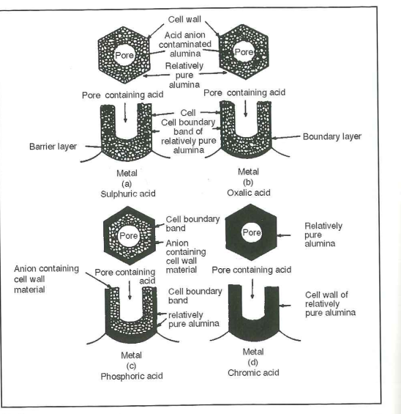
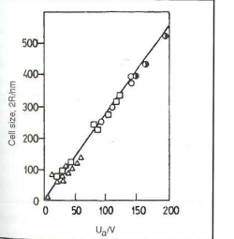
Morphological parameters have also been determined, including pore diameter and the number of pores per unit surface area, in relation to anodizing conditions (bath type, temperature and voltage). Figure 9 (16), Tables 3, 4 and 5 (17–19), and Figures 10 and 11 report the results of some of these determinations.
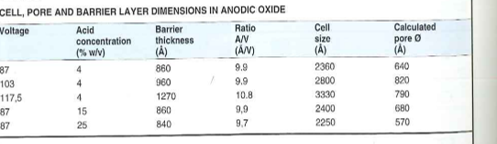
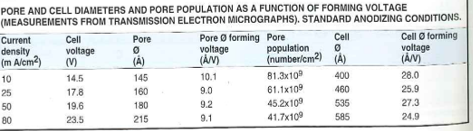
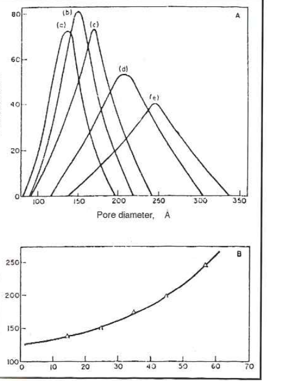
The extensive bibliography and large number of tests support the conclusion that not only has oxide morphology been clarified, but the factors that determine it are also being progressively identified. By way of example, Figure 11 shows how cell diameter depends on anodizing voltage: a linear relationship is observed for the four acid baths tested (oxalic, phosphoric, glycolic and tartaric).
HYDRATION OF ANODIC OXIDES
One of the first experimental observations on oxide properties concerned hydration capacity: on contact with water, oxides absorb H₂O molecules and hydroxyl ions. The increase in weight depends on the formation conditions and test temperature. The histograms in Figure 12 shows the extent of hydration in water at 20 °C and 95 °C for oxides formed in different electrolytes (18), together with their capacity to absorb anions.
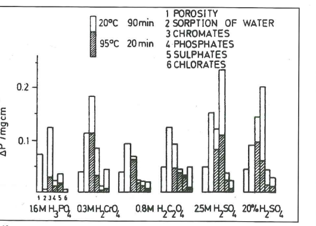
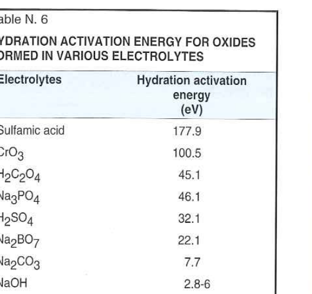
Ageing behaviour is determined by the ability of anions to form bonds with the oxide surface. This ability increases in the order chromate < oxalate < sulphate; the ease of hydration follows a similar order. The same conclusion can be reached from the activation-energy data for hydration in Table 6 (19).
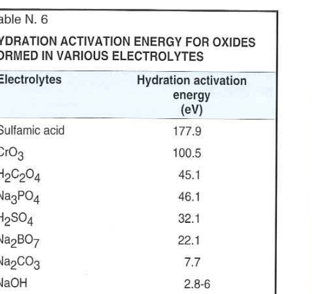
The activation energy for hydration is particularly important for sealing, discussed below, because high-temperature processes hydrate the porous oxide.
ANODIZING CYCLE
Mechanical surface finishing
This treatment, usually performed with metal brushes, eliminates small imperfections on the surface, such as extrusion lines and marks caused by handling, storage and transport. It also gives the piece the distinctive aesthetic effect of visible brush lines.
Degreasing, pickling, etching and neutralization
Degreasing is the first essential surface treatment and removes greasy residues from previous processing. It is usually carried out in aqueous solutions containing surface-active agents under slightly alkaline conditions. Organic solvents, once widely used, are now used sparingly for safety and environmental-health reasons.
Pickling is the first stage that actually attacks the metal, except for some mild treatments that remove only the surface oxide. Chemical etching is, in a sense, an alternative to pickling. It is usually performed in sodium-hydroxide-based solutions, attacks more deeply and gives the surface a matt appearance.
The final preliminary treatment is neutralization, performed by immersing the piece at room temperature in 50% nitric acid, a 20% nitric-acid solution with oxidizing salts added, or sulphuric acid with oxidizing agents. It neutralizes residual alkalinity from the previous treatments and removes any patina remaining on the surface.
Anodizing
Industrial anodizing is generally performed in baths based on sulphuric acid, or sulphuric acid with oxalic acid. Anodizing in chromic acid, common in the past, is now rare and used for specific applications. Sulphuric-acid baths account for most treatments because they offer the best compromise between cost and performance: they produce transparent, highly absorbent films that are sufficiently hard and compact under simple, reproducible conditions.
Sulphuric-acid anodizing can produce transparent films up to 25 µm thick under the conventional process at 20 °C and 20 V. These films resist corrosion well, even after prolonged direct exposure to the elements. Oxalic acid produces aesthetically similar, yellowish films that are harder and more abrasion-resistant; the process is more expensive because it requires higher operating voltages.
Chromic-acid baths produce whitish, opaque, enamel-like films that are thin and rather soft. They are particularly suitable for highly alloyed series such as 2000 and 7000, for which other processes may yield dark, thin, poorly compact and weakly protective oxide films. Films formed in chromic acid are more elastic and can be deformed or heat-treated without cracking. For this reason chromic-acid anodizing is used in specific fields such as military and aeronautical applications.
Colouring
Newly formed anodic oxide is porous, with more than 70 billion pores per cm² (Table 5). When an anodized piece is immersed in a colouring solution, pigment can impregnate the pores and produce a colour of varying intensity. Many pigments used for textiles also colour anodic oxide; the best are not only adsorbed but can also bond chemically to the oxide. There are two main systems, adsorption and electrocolouring, as well as mixed colouring, which combines the two. In adsorption, pigment is located and anchored at the top of the pore; in electrocolouring, it penetrates to the bottom under the applied electric field, providing better resistance and stability over time.
Adsorption colouring is performed by immersing anodized material in suitable colouring solutions without electric current. Depending on the pigment, colouring is classified as organic or inorganic. Organic colouring uses water-soluble dyes with high light fastness (above grade 8 on the reference scale in ISO 2135). These substances enter unsealed oxide pores and form chemical bonds by: a) replacing hydroxyls in the oxide film with anions; b) forming covalent bonds; or c) being adsorbed by electrostatic forces. Results depend on several parameters, including oxide thickness, operating conditions and pigment characteristics.
Inorganic colouring is based on the precipitation of metallic compounds, generally hydroxides, inside the anodic oxide pores. It offers a narrower range of shades than organic dyes, but greater fastness to light and temperature changes. Two types are widely used for architectural and outdoor decorative applications: gold, from ammonium ferric oxalate, and bronze, from cobalt and permanganate.
Electrocolouring, or electrolytic colouring, has become widespread in many fields. Anodized material is treated with alternating current in tanks containing metallic-salt solutions and special additives. The electric field deposits metallic particles at the bottom of the oxide pores. After sealing, the colour is durable and can withstand severe service conditions. The colour depends on the metallic salt; in many cases the same colour can be obtained with different ions (for example Sn²⁺, Co²⁺ and Ni²⁺) because of the scattering effect. Shades are closely linked to treatment time.
Many formulations can provide a wide range of colours, although relatively few processes are used industrially. The most widespread shades belong to the bronze range (champagne, light, medium and dark bronze, through to black), produced with cobalt, nickel or tin salts. Nickel- and cobalt-salt baths appeared first; tin-salt baths were introduced later and have largely replaced them, especially in Italy. Mixed colouring combines electrocolouring and organic colouring. It is attracting growing interest because it broadens the available colour range while maintaining good durability.
Sealing
The introduction of sealing as a technology for improving the corrosion protection of anodized aluminium was, in a sense, a chance discovery. The first industrial anodizing process used chromic acid; its final stage was a rinse which, if hot, gave better results against fingerprints and, on coloured oxide, fixed the dye more effectively, reducing its loss after handling or exposure to humid or corrosive environments.
After the empirical discovery of the benefits of a hot final rinse, the phenomenon was studied in greater depth (21). The first patents recommended sealing in water for 30 minutes at 80–100 °C (22, 23). The name of the process took on a more technical meaning and differs between countries according to the interpretation of its result or mechanism. In Italy it is called “fissaggio”, referring to the fixing or blocking of organic dye or chromophore metal in the pores of the anodic film. English uses “sealing”, close to French “colmatage” (filling or closing) and German “Nachverdichtung”.
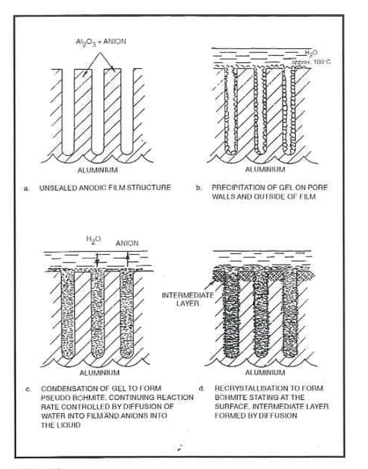
These terms give a rough idea of the mechanism that blocks dyes and protects against corrosive agents entering the pores: in hot water at around 100 °C, porous aluminium oxide is transformed into hydrated oxide, boehmite or pseudoboehmite (AlOOH) (24). The product occupies more volume and can close the pores, better isolating the base metal from corrosive attack (Figure 13).
THE METHODS EMPLOYED FOR SEALING
Sealing in boiling deionized water
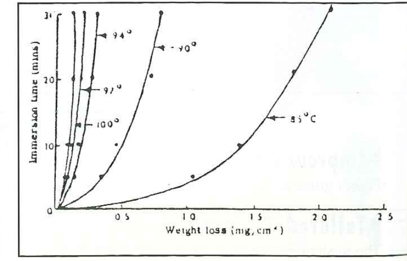
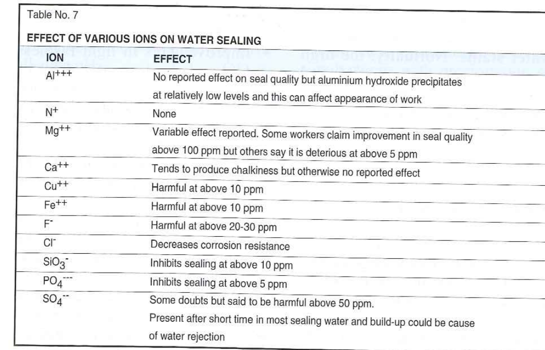
The first practical problems occasionally observed after sealing in boiling water were chalkiness of the oxide, with the formation of a surface film, and in some cases even partial dissolution of the anodic coating. In-depth studies showed that water pH, quality and temperature, and sealing time are critical to the final quality of the process. The ideal conditions were found to be: pH 5.5–6.5; temperature 96–100 °C (Figure 14); time 3 minutes per micron of oxide (Figure 15); deionized water. The effects of the main contaminant ions are listed in Table 7 (25).
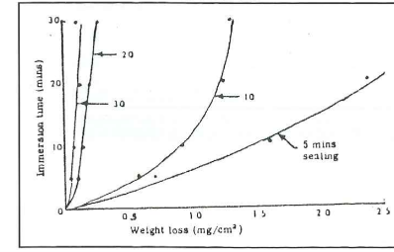
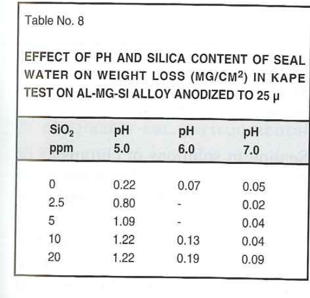
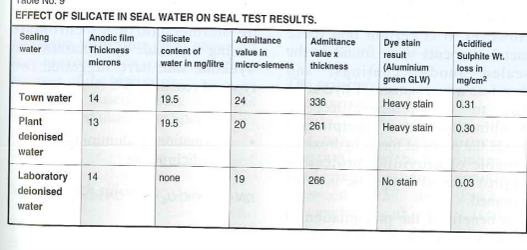
Silicates present in hydrated form, such as silicic acid, are among the most dangerous contaminants for sealing in boiling water. Their effects are considered in Tables 8 and 9 (25).
In the post-war years, demand for anodized aluminium grew in both the architectural and automotive sectors, and research made considerable progress in studying the sealing mechanism, developing reliable laboratory control methods and accelerated corrosion tests, and introducing alternative sealing methods. Apart from boiling deionized water, the main processes are:
- Steam sealing
- Sealing with metal salts
- Sealing with chromates, molybdates or tungstates
- Sealing with silicates
- Low-temperature sealing (30 °C) with nickel-based salts and fluorides
- Sealing with water-soluble acrylic resins
Numerous patents also demonstrate the possibility of using other processes, including in non-aqueous environments, but their industrial use is limited because of unsatisfactory quality results.
Steam sealing
Steam sealing was first studied and applied in Japan (26) on anodic coatings formed in an oxalic-acid-based electrolyte. Some patents reported the advantages of using steam under vacuum, but later studies showed that vacuum was unnecessary: temperature was the critical factor (Figure 16).
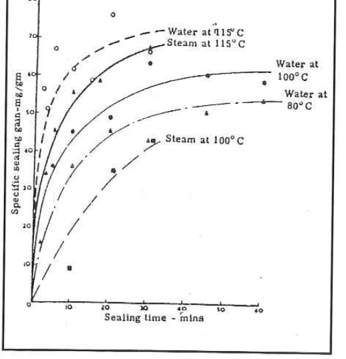
Brace (27) was among the first researchers to study the effect of temperature. He found that samples sealed in steam at 115 °C gave much greater oxide weight gain than samples sealed at 100 °C. Lenz (28) showed that corrosion resistance improved further at higher temperatures, up to 150 °C, and stressed the importance of avoiding condensation on the samples. Schmecken (29) compared the impedance of coatings sealed in water and in steam and generally found higher values for the former. The qualitative superiority of steam sealing over boiling water, or vice versa, was never conclusively demonstrated, partly because no systematic study compared accelerated-corrosion or exposure results in different atmospheres. The comparison was based mainly on investment and production costs.
An efficient steam-sealing system is more expensive to build than a water-sealing tank. The vessel must be perfectly airtight to maintain the optimum pressure of 0.7–1 atmosphere; the system must reach the required temperature and pressure in no more than 5 minutes, normally 2–3. The main advantage attributed to steam is the absence of contaminants and greater reliability. Some accelerated tests (sulphur-dioxide atmosphere, weight loss and impedance measurements) favour steam sealing, but plant design must be carefully managed to avoid contradictory results.
Although steam sealing avoids contaminants such as silicates, attention must be paid to any sulphuric-acid-containing rinse water remaining on the oxide, which can interfere with or even inhibit sealing in some areas at the temperatures used. Another serious problem is steam condensation on support-holder bars and on cooler parts of the system: water droplets on the oxide can cause “water stains”. High investment costs are offset by low operating costs when suitable plant-design criteria are followed.
Sealing with metal salts
A wide variety of metal salts in aqueous solution have been proposed for sealing anodic oxide. Once absorbed into the pores, they hydrolyse and precipitate as hydroxides (30–32). Technical and patent literature reports nickel, cobalt, cadmium, chromium, aluminium and lead, in solution as acetates, sulphates, oxalates, citrates and tartrates. In-depth research into the various salts was carried out mainly by Kape (33).
The most widely used salts are nickel or cobalt acetates and sulphates (34, 35), sometimes in combination, at concentrations of 0.1–20 g/L, temperatures of 75–100 °C and an optimum pH of 5.5–5.8. Boric acid or ammonium acetate has been suggested as a pH buffer. The role of these salts and the sealing mechanisms have not been fully clarified; however, the metal elements have been found in sealed anodic coatings. A mechanism involving temperature-driven hydration together with precipitation of protective metal hydroxides inside the pores is therefore assumed.
Precipitation of metal ions, particularly nickel and cobalt, improves sealing-test results even at relatively low temperatures (75–85 °C). Nickel salts also offer greater light-fastness and less colour loss in pigmented anodic coatings, due to covalent bonds with chromophore organic compounds; reduced influence of contaminants on final sealing quality; and the possibility of using mains or well water, with less frequent replacement of deionized water (37). Drawbacks include surface powder that is difficult to remove and tends to re-form, and a tendency to produce many small pits, which are generally less numerous, though sometimes larger, than with hot deionized-water or steam sealing.
Sealing in chromate solutions
Sealing in chromate or dichromate solutions (38, 39) is considered particularly effective in inhibiting corrosion, especially on aluminium-copper alloys, but it generates highly polluting effluents and gives the oxide a yellowish colour. Tomashov and Tyukina proposed two reactions (40): formation of aluminium oxydichromate, favoured at lower pH, and aluminium oxychromate at alkaline pH. Normal oxide hydration and transformation into boehmite occur at the same time. The ideal pH is 6.3–6.7, the temperature 94–98 °C and the time 10–15 minutes. Above pH 7 sealing proceeds faster, but above pH 8.5 the oxide dissolves. The salt normally used is potassium dichromate.
OAlOH + KHCrO₄ → OAlHCrO₄ + KOH
2 OAlOH + KHCrO₄ → OAl–CrO₄–AlO + KOH + H₂O
Chromates are known corrosion inhibitors; sealing with chromates also preserves the oxide’s mechanical properties better than boiling deionized water. This is why it remains in use in military and aeronautical sectors (41), despite current environmental restrictions. Lockheed developed and patented a two-stage process (42): immersion in a chromate-tungstate-molybdate bath at 98 °C, followed by immersion in nickel acetate solution at 80 °C. The result has high anticorrosion performance, but its cost restricts use mainly to aeronautical applications. Molybdate-based sealing solutions were studied chiefly by Spooner.
Sealing with silicates
This process was studied and patented by Whitby (43), who found that the best Na₂O:SiO₂ ratio was 1:3.3; silicates with a ratio greater than 1:2.9 could not be used because of their high alkalinity. Schenk proposed an optimum ratio of 1:3.86. The process is interpreted as oxide hydration accompanied by precipitation of SiO₂ or sodium aluminium silicate. It has limited use because of poor atmospheric-corrosion resistance, although it is one of the few processes capable of conferring alkali resistance.
Low-temperature sealing (sealing by conversion)
The success of the low-temperature process is due both to economic advantages and to improved coating characteristics: greater hardness and absence of surface powder (44, 45). Conversion sealing based on nickel, fluorides and surfactants (46, 47) replaces conventional hydration in water or boiling solutions (95–100 °C for 30–60 minutes). Only 10–12 minutes in a bath at 30–35 °C are needed, saving space, tanks and energy. Pore closure takes place by chemical conversion of the pore walls: fluorides react with aluminium oxide, releasing OH⁻ ions that cause protective nickel hydroxide to precipitate and form a compact, non-absorbent coating that preserves the original hardness.
The principle of conversion sealing
The new conversion processes originated in fundamental studies carried out between 1957 and 1963 by researchers at the Istituto Sperimentale dei Metalli Leggeri in Novara (48). A comparison between conventional sealing in boiling distilled water and the nickel-salt process used in Italian industrial plants showed that:
- sealing in distilled water gives excellent results only when the water is very pure and near boiling, and the treatment is long (at least as long as anodizing); nickel-salt sealing is unaffected by impurities in drinking water and gives good results at shorter times and lower temperatures;
- among nickel salts, sulphate gives better results than acetate;
- sealing quality in nickel salts improves sharply with ageing over several days; even lower-temperature and shorter treatments then reach corrosion resistance close to that obtained under ideal conditions;
- nickel-sulphate sealing combines hydration and swelling of the coating with precipitation, probably of nickel oxide, in the pores; precipitation tends to form a mechanical plug at the pore openings;
- all sealing processes in boiling water or solutions form a powdery surface layer, a sign of effective hydration but a source of removal problems.
Later studies in Italy (44) and Japan (46) showed that the physical component of nickel sealing, precipitation and ageing, can be enhanced by using salts more reactive than sulphate, such as fluorides, adjusting concentrations and pH and adding polar solvents and surfactants to promote gradual precipitation inside the pores.
The low-temperature process achieves two results: sealing is complete after 10 minutes at 30–35 °C, largely through conversion and precipitation at the pore walls, without requiring hydration; and little surface powder forms because hydration of the coating over time is limited.
CHARACTERISTICS OF COATINGS SEALED BY CONVERSION
References to coatings sealed by conversion mean coatings aged for at least 4 hours, since ageing is fundamental in nickel-sealing processes and is deliberately enhanced in the new low-temperature process. The most interesting coating properties are hardness, corrosion resistance and resistance to chemical agents.
Hardness
Conventional hydration sealing is known to reduce coating hardness considerably. The transformation of porous, anhydrous oxide into boehmite in very hot water causes swelling and closes pores with inert material, but boehmite is softer than the original anhydrous oxide. In thick, hard-wearing anodic coatings, wear resistance fell by about 60% when the pores were closed by hydration sealing. The hardness reduction is less important for architectural coatings 15–25 µm thick, but fundamental for 30–200 µm wear-resistant coatings. Conversion sealing does not reduce hardness and can increase it through precipitation and formation of complex compounds with the oxide at the pore walls.
Microhardness measurements (MV 0.015) on cross-sections of 12–13 µm coatings gave: unsealed oxide, 340–360 Vickers; oxide sealed by hydration, 280–300 Vickers; oxide sealed by conversion, 540–560 Vickers.
Resistance to corrosion
Anodic coatings may undergo two types of alteration, depending mainly on their characteristics and highlighted by different accelerated-corrosion tests. Pitting depends greatly on thickness and on hygroscopic particles, sulphate ions and chloride ions in the atmosphere. Sealing has less influence: only very poorly sealed coatings pit before thinner, well-sealed coatings. General chalkiness or loss of gloss depends mainly on the degree of sealing or oxide re-attack when the process is incorrect, for example when the anodizing bath is too hot or the treatment too long.
The accelerated tests that best reveal pitting are salt sprays, in increasing order of aggressiveness: normal salt spray, acetic salt spray and copper-accelerated salt spray (CASS). Tests for chalkiness include the Kesternich test (SO₂ atmosphere), weight loss in phosphor-chrome solution (ISO 3210-1974), and immersion in sulphuric or hydrochloric acid or sulphite (Kape test) (49). All the tests show that low-temperature-sealed coatings have resistance comparable to coatings sealed in boiling water.
The phosphor-chrome solution weight-loss test indicates insufficient sealing through surface chalkiness and coating weight loss. Low-temperature conversion-sealed samples repeatedly passed tests in US laboratories, with results better than hydration sealing: losses below 15 mg/dm² for ordinary sulphuric-acid coatings and below 6 mg/dm² for integral-colour coatings. These results appear after 6 hours of ageing and continue to improve. The phosphor-chrome test was adopted as the ISO method because it is equivalent to, and faster than, earlier tests such as immersion in dilute acids or the sulphite test.
Resistance to chemicals
This discussion focuses on resistance to alkaline substances, since corrosion tests have already shown acceptable behaviour at low pH. Improved alkali resistance is immediately apparent when aluminium rack systems are pickled: caustic soda acts easily immediately after treatment, whereas after ageing lengthy preliminary immersion in nitric or sulphuric acid is required. This property opens up applications for frames, indoor components and household aluminium utensils, which become more resistant to strongly alkaline detergents. Standardized weight-loss tests in caustic soda (50) and surface-attack tests with quicklime confirm the advantage.
In conclusion, the technical advantages are low temperature and short process time; absence of surface powder; coating hardness that increases rather than decreases; environmental and acid-corrosion resistance equal to that of conventional sealing; and greater alkali resistance. Conversion sealing performs better not only on conventional sulphuric-acid coatings, but also on integral-colour and thick coatings, and on chromic-acid coatings, including those on hard alloys for aeronautical use.
THE ECONOMICS OF THE CONVERSION PROCESS
The low-temperature process allows significant savings because the bath operates at 30–35 °C for 10–12 minutes instead of 96–100 °C for 30–60 minutes. Further savings result because the surfaces leave clean and free of the powder typical of hydration processes, so no final cleaning or oiling is required.
Sealing with organic resins
A process widely used in Japan deserves mention: electrophoretic deposition of water-soluble, generally acrylic resins inside the oxide pores. The best-known system is Honnylite, developed by Honny Chemicals: an anaphoretic process in which acrylic resins are deposited at about 150 V for 2–3 minutes, to a thickness of 10–12 µm in addition to the anodic oxide. The next stage is stoving for 20–30 minutes at about 180 °C. Despite its excellent corrosion and alkali resistance, the process has not spread widely outside its countries of origin because of high plant and production costs and difficult technical management.
SEALING TESTS
In most anodized aluminium applications, sealing quality is an extremely important feature, since it is one of the main factors in assuring resistance to corrosive environments. The need for simple, quick or even immediate tests has led to the development and standardization of verification tests which can be correlated to a certain extent to the corrosion resistance of the oxide produced. The tests can be subdivided into:
- laboratory tests
- accelerated corrosion tests
- exposure tests
Laboratory tests
The main tests which can be carried out in the laboratory at the end of the surface treatment cycle can essentially be divided into three groups:
- a) weight-loss tests in acid solution
- b) absorption tests using a drop of dye
- c) tests of an electrical nature (measurement of impedance or admittance)
CHECK ON SEALING EFFICACY USING DESTRUCTIVE METHOD (Phospho-chromic acid solution ISO 3210) This method consists of immersing the anodized surface in a solution of phosphoric and chromic acid. A poorly sealed oxide film is partially dissolved and the weight loss is related to the degree of sealing. If the sealing process is not correctly carried out, this immersion also causes a chalking effect. CHECK ON SEALING EFFICACY USING DESTRUCTIVE METHOD (Acetic acid and sodium acetate ISO 2932) This method consists of immersing the anodized surface first in a nitric acid solution and then in a solution of acetic acid and sodium acetate. A poorly sealed oxide film is partially dissolved and the weight loss, both in the first and in the second immersion, is related to the degree of sealing. If sealing is not correctly carried out, the second immersion also causes a chalking effect. CHECK ON SEALING EFFICACY USING DYE-DROP TESTS (UNI 3397-63 and ISO 2143) Interpretation of the results of these tests requires some practice; results should be considered definitive only when they are clearly positive or clearly negative.
film stains easily, while a well This test is non-destructive.
CHECK ON SEALING EFFICACY USING ADMITTANCE MEASUREMENT 1S0 2931
In this method, the sealing quality of anodic films on aluminium or aluminium oxides is tested by measuring the admittance or used as an acceptance test, on agreement between producer and user.
Applicability of the method
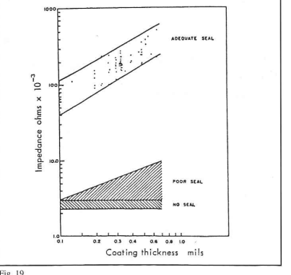
This method allows quick, non destructive measurement of the sealing quality of anodic films and is thus particularly suitable for routine checks.
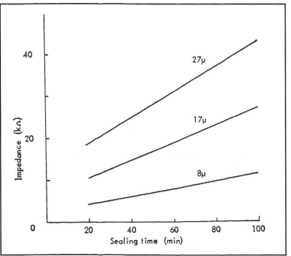
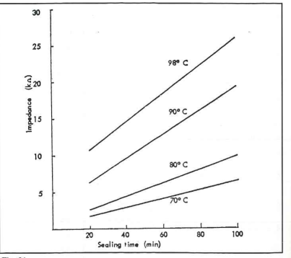
The values obtained depend on the thickness of the anodic film and the sealing quality, and this must be borne in mind for correct
The pretreatment, the type of anodization and the alloy used affect the admittance and is generally negligible.
The test can be performed on all anodized pieces which have sufficiently large surface area (surface measuring > 20 mm), and on which the film thickness can be measured.
Definitions
The admittance y is in reverse proportion to the apparent overall resistance Z (impedance) which, in a circuit through which alternating current passes, is given by the vector sum of the real resistance R and the reactance Xc.
y=I/Z
Z = √(Xc² + R²)
where R = ohmic resistance; Xc = 1/(2πfC) is the reactance; f = frequency of the alternating current; C = capacitance.
Principle of the method
An oxide film obtained by anodization of aluminium may be represented from the electrical point of view as a circuit through which an alternating current passes.
The circuit consists of a certain number of ohmic and capacitative resistors, connected in series and/or in parallel.
The value of these resistors depends on the following variables:
- Base metal (e.g.: composition, dimensions and distribution of the intermetallic compounds, surface film);
- Sealing processes (steam-boiling water-nickel salts or additives);
- Colouring or pigmentation processes used to colour the anodic oxide film;
- Cleaning processes after oxidation (e.g. cleaning with oilpetroleum spirit mixtures);
- Natural of the additional treatments after sealing (e.g. coating with waxes or paints);
- Storage conditions and time between sealing and measurement.
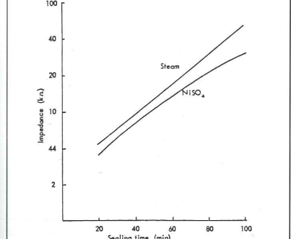
The diagrams below illustrate the depending on a number of variables (Fig. 17-18-19-20-21-22).
All the methods described above have advantages and restrictions in use and none of the tests should be prescribed without distinction for all types of oxide and all types of sealing.
The preference must be given to weight loss tests; since they measure chemical resistance, they can be correlated to the resistance to corrosive agents and atmospheric agents.
Dye drop absorption tests measure similar properties and overall their they cannot be evaluated in quantitative terms.
Since they are not tests on direct corrosion, admittance tests should not be carried out in isolation, but should be combined with at least one of the other tests. They are therefore used above all because of their convenience and the fact that they are not destructive, but the results always require confirmation.
ACCELERATED CORROSION TESTS
Although they provide a valid model for evaluation of corrosion resistance, accelerated corrosion tests must not be considered as exactly equivalent to the action and anodized aluminum in the different environments.
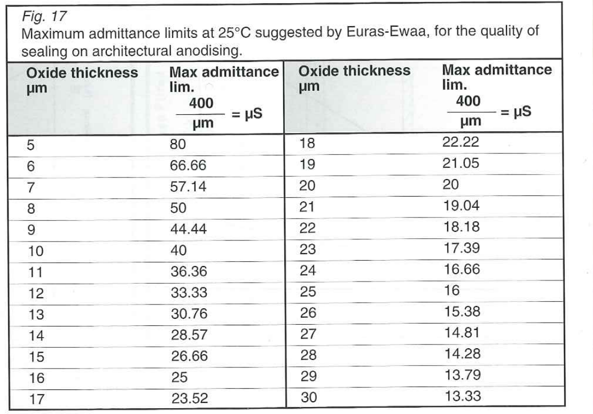
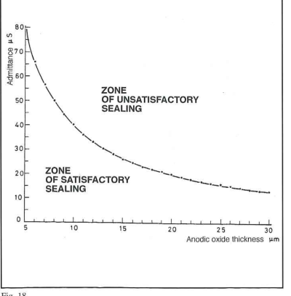
There is obviously a good correlation, but it is not always easy to interpret the results obtained, and sometimes there may be a tendency to jump to hurried, incorrect conclusions.
Accelerated corrosion tests should be chosen in such a way as to assure the level of quality of the product, meaning the combination of the properties of the metal and the and sealing conditions.
The most widely used tests are thus mainly reproducible and relatively quick.
The best-known test is the salt spray test (nebulized 5% NaCl solution for 500–1000 hours), although the acetic salt spray test is normally used, mainly because it is quicker. This uses a solution consisting of 3% sodium chloride and acetic acid up to pH 3.2–3.5, and provides visible results after just 100 hours.
Where extremely simple tests are needed, immersion for six days in saline-acetic solution (25 g/l of NaCl, 15 ml/l of glacial acetic acid and 3.3 ml/l of H₂O₂ at 30% by volume) is also used.
One more specific and sophisticated test uses a solution of sodium chloride and copper chloride in spray form in special equipment at 50°C (CASS test, BS 1615-1972, annex J or ISO 3770) (Fig. 23).
All the tests mentioned so far are particularly suitable for evaluating resistance to pitting corrosion, while for the generalized corrosion known as chalkiness on anodized aluminium, the Kesternich test is generally used.
In this test, samples are exposed in a small chamber in which a moist atmosphere containing CO, and SO, (BS 1615-1972, annex H) is created. It is considered that this test can be correlated to tests on exposure to industrial environments.
In the past, the Korrodkote test was also used, but it has now been discarded because of its doubtful worth in evaluating sealing quality and the unsatisfactory reproducibility of the results.
Electrolytic corrosion tests Although not widely used because they are more difficult than the chemical tests, these tests are still of a certain interest62). Two of them are the most commonly used.
In the first, a sample of anodized aluminium is made cathodic with direct current and high voltage. A drop of Cass solution is then placed on the sample and the current/time graph is then plotted over a period of three minutes.
However, the information given by this curve is strongly influenced more by the quality of the base metal than by the anodization and sealing quality (53).
In the second method, the sample of anodized aluminium is dipped in a 5% solution of formic acid and an anodic voltage of 40 volts is applied to it for 5 minutes4),
The corrosion resistance is correlated with the quantity of current which has passed.
TESTS ON EXPOSURE TO ATMOSPHERIC ENVIRONMENT
Atmospheric exposure tests are often carried out in parallel at different places and in different geographical areas, since corrosive attack characteristics vary considerably depending on the nearness of industrial facilities and the sea, the mean temperature, atmospheric humidity, hours of sunlight, rainfall, etc.
The angle of exposure of the samples is also very important. After years of exposure, the corrosion is generally evaluated on the basis of the loss of reflection, the variation in colour, measurement of weight loss, loss of thickness, presence of pitting, iridescence, etc.
Normally, the results of exposure tests are strongly influenced both by
nickel sulphate solution. (Alloy AIMgSi 0.5, anodized at 1.5 A/dm?)
the oxide thickness and by the sealing quality.
The quality of the oxide is another important factor, but it directly affects the sealing quality; in other words, even a sealing process carried out to the highest standards may give poor results if the oxide itself is of poor quality.
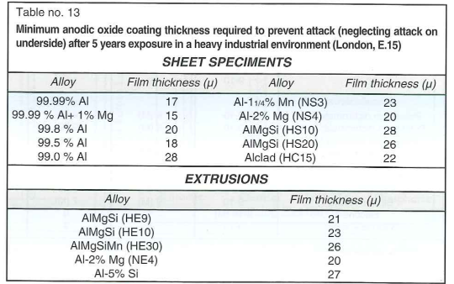
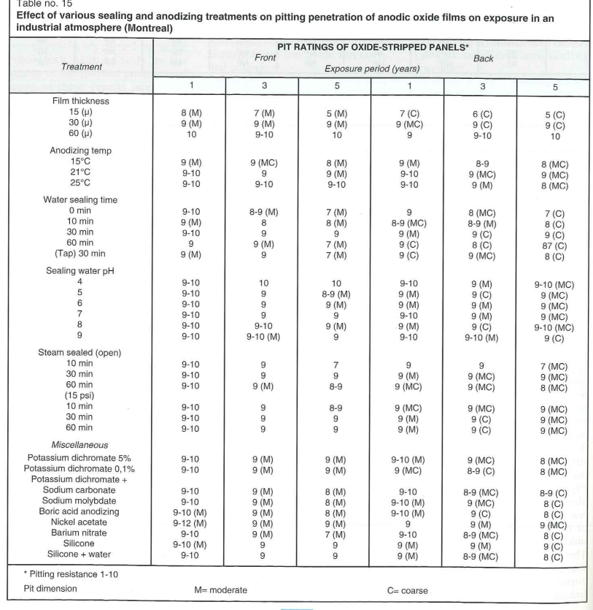
Liddiart et al. (55) reported ten years of exposure in industrial atmospheres for samples anodized to different thicknesses and sealed in the same conditions; only samples with more than 25 microns of oxide showed no pitting.
The results of nine years’ exposure in marine environments reported by Carter (56) are similar, except that in a marine environment even samples with 15 microns of oxide behaved perfectly.
The appearance of samples with the same anodic film thickness varies depending on the aggressiveness of the environment and the conditions used for sealing, particularly with regard to the time and type of sealing of the different samples.
The tendency to pitting depends on the quantity of sulphur dioxide, dust and chlorides.
The erosion of the oxide surface also varies from 1.2 to 0.4 microns/year.
The colouring treatment and the type of pigment or metallic element used may also affect resistance to corrosion and to light. Tables 10-11-12-13-14-15 which follow illustrate tests and the results of exposure in atmospheric environments.
RESISTANCE TO CORROSION
The literature contains numerous data concerning resistance to corrosion, for pure aluminium and alloys, and above all for alloys for use in architecture, which are the main share of anodized products.
It must be pointed out that many corrosion tests are carried out in the laboratory, such as tests on the quality of the finished product, and many of these results have been presented during discussions of the sealing process. A significant number of data relate to tests involving exposure to atmospheres of various types: rural, urban and industrial.
However, all the tests depend on the base material or the treatment performed: in other words, we are never provided with absolute data on the corrosion speed, expressed for example in mm/year or in g/m2/day, because of the pitting which generally occurs on aluminium when exposed to the atmosphere.
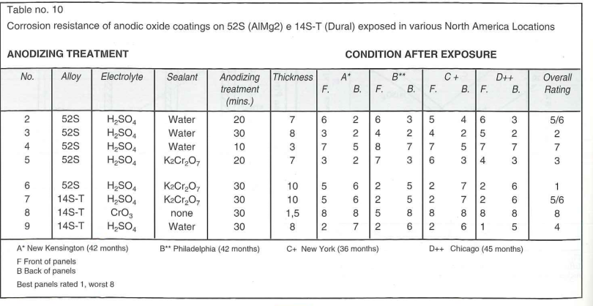
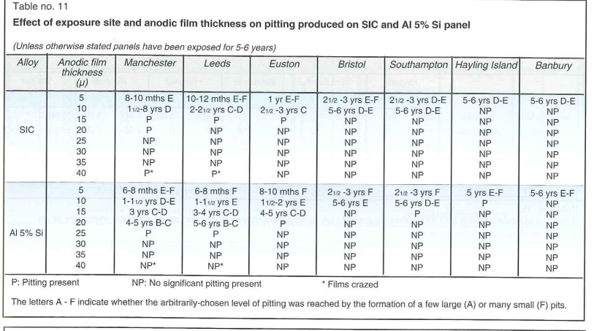
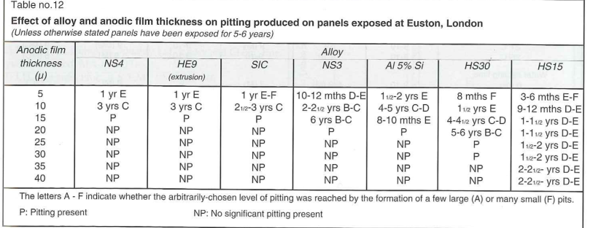
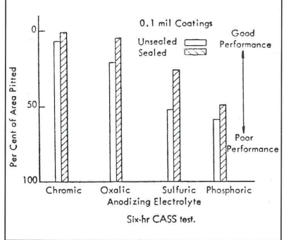
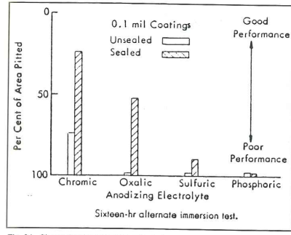
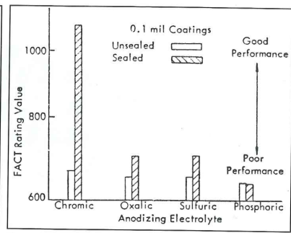
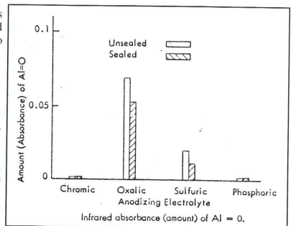
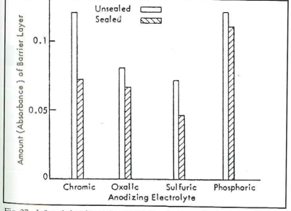
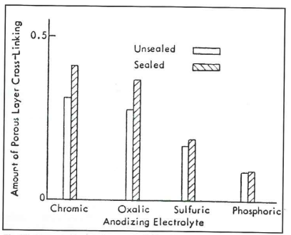
The beneficial effect of sealing in reducing corrosion is obvious, and is particularly marked for oxides formed in oxalic and sulphuric acid, with degrees which vary depending on the type of test. In all cases, corrosion resistance is highest for oxides formed in chromic acid and decreases as we pass to oxalic, sulphuric and phosphoric acids, in that order.
Figures 26-27-28 show the absorbance values linked to the reactivity of the Al-O bond, the size of the barrier layer and the cross-linking of the porous layer (57).
The IR structural analysis shows that the most important factor for corrosion resistance is the cross-linking of the porous layer, which is increased by hydration sealing and decreases quantitatively from chromic to oxalic, sulphuric and phosphoric acids, in the same way as corrosion resistance.
Bibliography
(1) M. POURBAIX, Atlas of electrochemical Equilibria in aqueous solutions 1964, p. 169
(2) S. WERNICK, R. PINNER & P.G. SHEASBY, The surface treatment and finishing of Aluminium and its alloys. ASM International, Chicago 1987, Vol 1 – P. 289-365.
(3) A.DEPSIC and V.P. PARKHUTIK, Electrochemistry of Aluminium, Vol. n. 20 J.O.M. Bockris Ralph E. White and B.E. Conway editors Plenum Publishing Corp. New York, 1989, p. 481-503.
(4) T.L. BARR, J. Phys. Chem. 82 (1978), 1901.
(5) E.SZONTAG, A.B. KISS, and E. KOCSARDY, Aluminium 59 (1983) 696.
(6) H.KONNO, S. KOBAYASHI, H. TAKAHASHI, and M. NAGAYAMA, Electrochim. Acta 25 (1980) 1667.
(7) P. SKELDOM, K. SHIMADSU, G.E. THOMPSON and G.C. WOOD, Surf. Interface Anal. 5, (1983), p. 247.
(8) V.P. PARKHUTICK, Corros Sci 26 (1986) 296.
(9) B.R. BAKER and R.M. PEARSON, J. Electrochem. Soc. 119 (1972) 160.
(10) G.A. DORSEY, J. Electrochem. Soc. 116 (1969) 466.
(11) G.E. THOMPSON, R.C. FOURNEAUX, G.C. WOOD, J.A. RICHARDSON, and J.S. Goode, Nature 274 (1978) 433.
(12) S.M. El Masur, A.J. Forty, L.A. FREEMAN and J. SMITH, Inst. Phys. Conf. Ser. n. 61, (1981) 395.
(13) S.M. EL MASHRI, A.J. FORTY and R.G. JONES, Scanning electron Microscopy 11 (1983) 569.
(14) K. KOBAYASHI, K. SHIMIZU, and D. TERANISHI, Jpn. J. Inst. Light Met, 36 (1986) 81.
(15) S. EL-MASHRI, R.G. JONES and A.J. FORTY, Phil. MAg. A. 48 (1983) 665.
(16) G.E. THOMPSON and G.C. WOOD, Nature 290 (1981) 230.
(17) G.C. Wood, O. Sullivan and B. Vaszko, J. Electrochem. Soc. 115 (1968), 618.
(18) F. Keller, M.S. Hunter and D.L. Robinson, J. Electrochem. Soc. 100 (1953), 411.
(19) G.C. Wood and O. Sullivan, Electrochim. Acta 15 (1970), 1865.
(20) V.T. Below, Zhur. Prikl. Khim. 48 (1975), 2836.
(21) G.C. Wood and J.P. O’Sullivan, J. Electrochem. Soc. 116 (1969), 1351–1357.
(22) British Patent 406,988 (1932).
(23) British Patent 407,457 (1932).
(24) D.P. Altenpohl, Aluminium 31 (1955), 10–14, 62–69.
(25) A.W. Brace, P.G. Sheasby, The Technology of Anodizing Aluminium, II ed., 1979, Technicopy Ltd, Stonehouse, England, pp. 217–262.
(26) S. Setoh, A. Miyata, Sci. Papers Inst. Phys. Chem. Res. (Tokyo), 1932, 17, 189.
(27) A.W. Brace, unpublished work.
(28) D. Lenz, Aluminium, 1956, 32, 126–135, 190–201.
(29) H. Schmecken, Aluminium, 1966, 42, 436–437.
(30) U.S. Patent 1,943,153 (1934).
(31) U.S. Patent 2,008,733 (1933).
(32) British Patent 388,787 (1931).
(33) J.M. Kape, Finishing Industries, 1977, 1, 13–20, 38–43, 49.
(34) F. Sacchi, G. Paolini, A. Prati, Electrocolouring and Metal Finishing, 1963, 16, 108–114, 146–149, 187–189.
(35) L. Campanella, Trattamenti e finiture, 1964, 4, 65.
(36) C. Th. Speiser, Aluminium, 1955, 31, 8–9.
(37) R.C. Spooner, Metal Finishing, 66, 12, 44–49, 53; 67, 1, 80–83, 91.
(38) U.S. Patent 1,946,152 (1934).
(39) British Patent 393,996 (1931).
(40) N.D. Tomashov, A. Tyukina, Light Metals, 1946, 9, 22–35.
(41) Defence Specification DEF-151, August 1972.
(42) British Patent 1,428,048.
(43) L. Whitby, Metal Ind., 1948, 72, 400–403.
(44) F. Sacchi, W. Dalla Barba, Aluminium Finishing, 1984, 1.
(45) F. Sacchi, Aluminium Finishing, 1984, 2.
(46) Japanese patent application Sho-49-24298, 28 February 1974, “Pore-sealing agents for electrolytically oxidized films of aluminium and aluminium alloys”, Yoshimura, Chozo (Okuno Chemical Industry Co. Ltd.).
(47) US patent application 05/27/83, “Process for the protective sealing of anodic aluminium oxide and its alloys which confers a particular resistance to aggressive alkaline agents”.
(48) F. Sacchi, G. Paolini, A. Prati, “Influence of Ageing of Anodic Oxide Films on Accelerated Corrosion Tests”, Electroplating and Metal Finishing, April 1963, pp. 108–114; May 1963, pp. 146–149; June 1963, pp. 187–189.
(49) British Standard 1615, “Acidified Sulphite Test”.
(50) Alkali test, Japanese regulation JIS H 8610, 1968.
(51) J. Patrie, Revue de l’Aluminium, 1976, 448, 77–88.
(52) Ford Motor Company, Quality Laboratory and Chemical Engineering, Physical Test Method, MA-P, BQ7.
(53) J.D. Edwards, Proc. A.S.T.M., 1945, 45, 146.
(54) J.M. Kape, ‘Testing of anodic coatings’, paper presented to the S.T.S. International Symposium for the Standardisation of Surface Treatments of Metallic Materials, Turin, October 1961.
(55) E.A.G. Liddiard, G. Sanderson and J.E. Penn, Trans. Inst. Met. Finishing, 1974, 49 (5).
(56) V.E. Carter, J. Inst. of Metals, 1972, (7).
(57) G.A. Dorsey, Plating, February 1969, American Electroplaters’ Society.